Europe’s Gas Storage Crunch Deepens Ahead of Heating Season
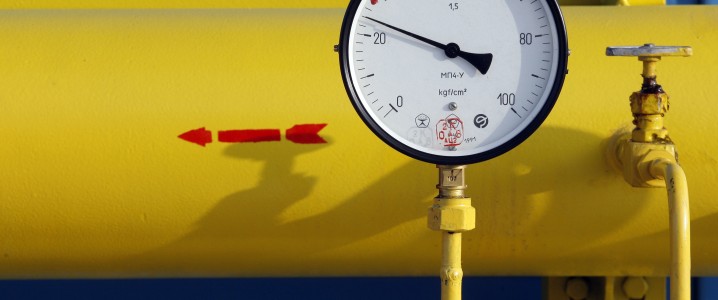
With less than three full months left until the start of heating season in much of Europe, the issue of gas inventories is becoming increasingly pressing. Current inventory levels are at the lowest in 17 years, and supply available for purchase is tighter than it was back in 2022. Yet Europe needs to start buying gas now—or risk shortages.
The energy import dependence of most of Europe has been in the spotlight for the past four years. The sanction barrage against Russia led the European Union—and Germany specifically, as Russia’s biggest gas client—to switch from one dependence to another, leaning heavily on U.S. liquefied natural gas. Yet European gas buyers were also buying Qatari liquefied gas, and now most of that is gone, and nobody really knows when it is coming back.
The LNG squeeze and the uncertainty about supply prospects have, of course, had a direct and rather painful effect on prices. Europeans are competing with Asian gas buyers for a limited volume of LNG—and that volume is about to become even more limited when the EU’s latest gas sanctions against Russia come into effect from January next year, banning all purchases of Russian liquefied gas, after this year EU purchases of Russian LNG hit an all-time high. Belgium, the seat of EU executive and legislative power, ironically sourced all of its gas from Russia last month.
What’s more, Europe’s summer demand for gas has been higher than usual because of higher seasonal temperatures, including a series of heatwaves across Western Europe. Summer is usually a trough demand season, which is when gas traders normally buy for storage. Yet this summer has been anything but usual, aggravating an already existing problem, as the European Union ended last winter season with much lower remaining gas in inventory than the five-year average.
Gas trading companies in Europe are in a wait-and-see mode, cautious about spending potentially too much money on gas that may trade lower when the time comes to sell it to power generators. This is a risky sort of cautiousness because there is an arguably greater risk of gas prices moving even higher as winter draws nearer and the urgency of refilling those storage caverns becomes even more pressing.
According to Bloomberg, governments could force gas traders to start buying, in order to make sure there is enough gas in storage come November 1, and prompt a bidding war with other gas importers, notably in Asia. Yet the bidding war is happening anyway, the only difference being the timing. If European governments order gas traders to start buying now, it will happen sooner. If they let the free market decide, letting gas traders wait until the last possible moment to start buying gas for storage, the war will happen later.
What this means is that however one looks at it, Europe will be paying through the nose for its winter gas, again. This means further pressure on already troubled economies, with no end of the war in the Middle East in sight. In winter, gas consumption on the continent rises as much as twofold, as noted by Bloomberg. Prompt purchases of LNG from the U.S. and pipeline deliveries from Norway, Algeria, Azerbaijan, and Russia (via Turkey) serve to cover demand but storage remains essential nevertheless because these suppliers cannot cover 100% of European winter gas demand.
Winter is coming, and natural gas prices are twice as high as they were before the United States and Israel first struck Iran on February 28, prompting retaliation that no one had believed Iran would resort to—closing the Strait of Hormuz. Six months later, the strait remains closed, with tanker traffic a trickle. Even if the hostilities end today, it will be a while before LNG flows out of the Persian Gulf normalize. The U.S. can ramp up exports even further from their already record levels, but that would come at a price. The problem for the European Union, if not all of Europe, is that it is already paying a lot for its electricity. Just how much higher prices the bloc’s energy consumers can stomach remains a worrying question that will get its answer in a few months.
This post appeared first on https://oilprice.com